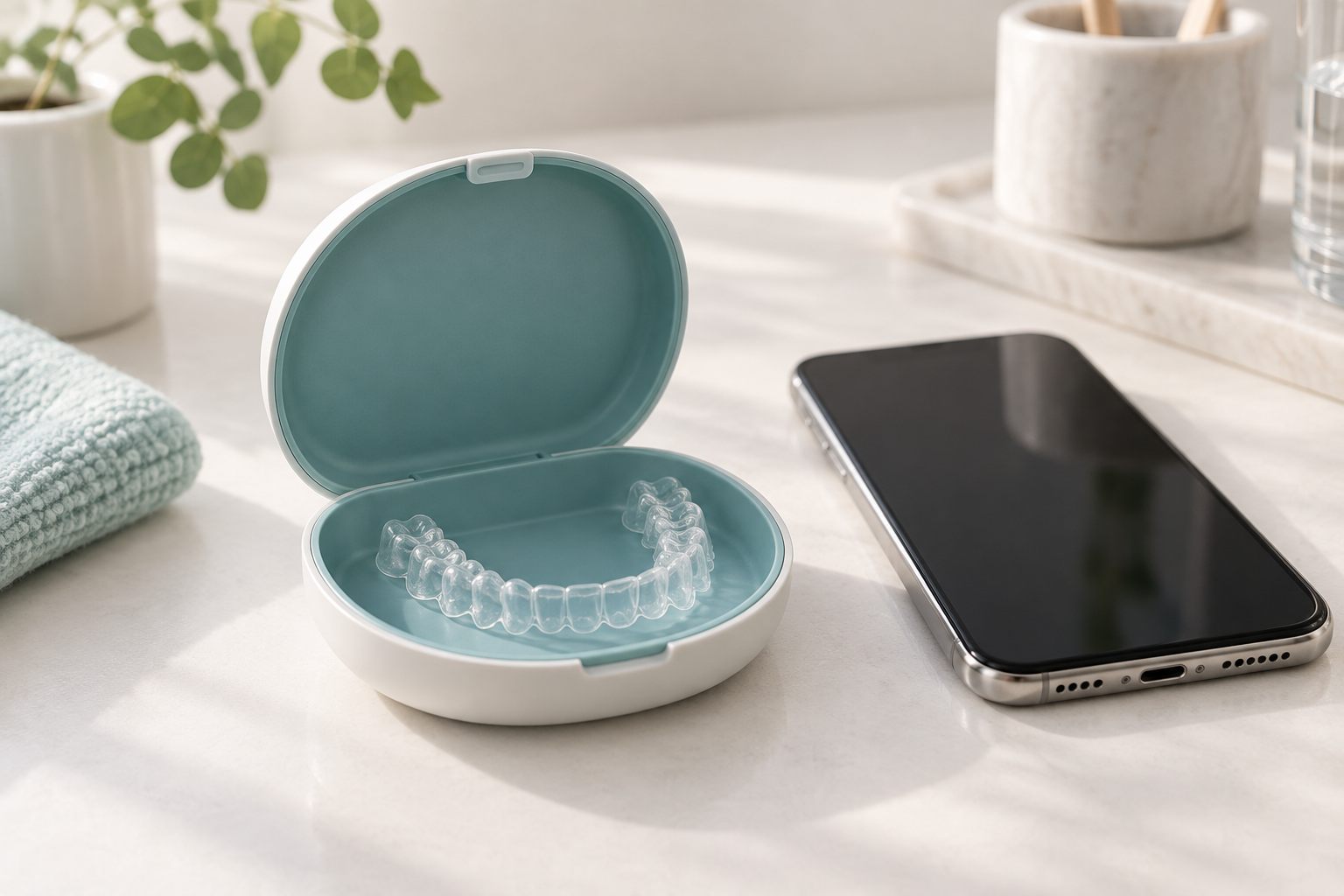
Which factors affect the cost of clear aligner treatment?
Understand treatment scope, aligner systems, reviews, additional trays and retention, and what to ask when comparing personal…
Read the articleUnderstand suitability assessment, attachments, elastics, additional aligners and retention, and why simulations and brand names cannot guarantee results.
Author: Assoc. Prof. Dr. Halise Aydemir, Orthodontic Specialist.
Clear aligners may address selected crowding, spacing and bite problems when movements are suitable and wear is consistent. Invisalign is one brand of individually made removable aligners. Suitability requires examination of gums, jaws and movements, not appearance or simulation alone.
After assessment and records, the orthodontist plans movements. Sequential appliances are made from impressions or scans. Change timing, daily hours and review intervals are individual. Simulation explains intentions without guaranteeing outcomes. The AAO emphasises specialist assessment.
A scan alone is not the first assessment. Alignment, bite, gums and restorations are examined, and necessary photographs and radiographs selected. Active decay, gum disease or other problems may need attention first. Planning therefore includes health and bite, not front-tooth appearance alone.
Ask which movements and bite changes are intended, whether attachments, elastics or other procedures are needed and how shortfalls will be managed. A brand or final simulated image cannot answer these.
Teenagers and adults may be candidates when movements can be planned and daily wear maintained. Gaps, crowding or bite problems prompt assessment without establishing suitability. Similar crowding can conceal different root and bite goals.
Three areas matter: oral health, including control of active disease; movement goals, including roots and opposing contacts; and wear practicality, meaning actual daily use.
| Starting point | Assessment |
|---|---|
| Spacing or crowding | Where space comes from and required movements. |
| Bite discrepancy | Dental and skeletal components. |
| Restorations or missing teeth | Existing and future procedures in the plan. |
| Gum concerns | Disease control and movement limits. |
| Frequent removal or forgotten wear | Sustainable routine and alternative methods. |
Hypothetical example: Two adults may have similar crowding, but one can wear aligners consistently while the other needs to leave them out for long periods. Even if the tooth movements are clinically suitable, the second person may struggle to follow the treatment plan. This is a question of practicality, not a judgement about willpower.
It is inaccurate to say either that aligners are suitable only for mild problems or that they suit everyone. Complex movements may need auxiliaries and detailed monitoring, or another method. Aligning teeth and changing skeletal jaw position are separate goals.
The BOS aligner information discusses assessment and auxiliaries. The braces comparison covers daily differences.
It is not a manufacturing exercise beginning with a scan and ending with the last box. Goals, application, reviews and retention connect to monitor actual movement.
Hypothetical example: Straight-looking front teeth may coexist with incomplete posterior contacts. Reaching the final aligner can still lead to another stage after review. This is not itself proof of error; explain reasons, scope and timing effects.
Skipping numbers or accelerating changes does not solve poor fit. Follow personal instructions and the aligner problems guide.
Do not copy another patient's hours or intervals. Understand change and review criteria rather than one fixed number. Active aligners and retainers differ; see the retention guide.
Some treatment involves more than a transparent tooth covering. All auxiliaries and responsibilities should be explained initially.
Attachments are small, usually tooth-coloured shapes that aid engagement and movement control. Shape and location depend on goals. Tooth colour does not mean invisible; visibility varies.
Elastics may support opposing-tooth relationships. Connections, wear and replacement are individual. Another person's pattern is not transferable. Report detached attachments or hooks without home gluing.
Additional series address remaining or replanned movements, following revised goals, fit issues or incomplete movement. Actual wear and fit are reassessed too.
| Term | Role | Clarify beforehand |
|---|---|---|
| Attachment | Aids aligner-tooth movement control. | Placement, visibility, care and detachment reporting. |
| Elastic | Supports particular bite goals. | Connections and wear instructions. |
| Additional aligners | Address remaining or revised movements. | Reason, scope and reviews. |
Interproximal enamel reduction or extraction may be considered for space in some cases. These are not universal standard steps; explain needs, alternatives and risks separately.
The BOS information includes attachments and elastics. Understand their goals as well as names; report problems rather than adjust at home.
Clear aligners are not worn only at night: daily use generally covers most of the day and night. AAO and BOS patient information describes around 22 hours or more of wear. Your orthodontist sets your own wear time and change interval; this general guidance does not replace that plan.
Remove aligners for meals, drinks other than plain water, and oral hygiene, and store them in their case. Do not clean them with very hot water. Keep up with cleaning, prescribed wear and reviews together. If frequent removal makes consistent use difficult, explain this at your assessment; whether the routine fits your daily life is part of choosing treatment.
Use the case at meals and clean teeth and aligners as instructed before reinserting. Avoid very hot water or unsuitable chemicals. The cleaning guide gives daily steps.
Report number and problem without independently advancing; the problems guide explains first steps.
Removability and discretion may benefit some people. Fixed braces stay in place and offer different mechanics for some movements. Neither is automatically faster, better or more comfortable for everyone. See the comparison and complex movement guide.
Movement predictability varies. Roots, large movements, marked skeletal discrepancies or complex bites may need other mechanics or braces. This does not restrict aligners solely to mild cases; assess your intended movements.
Wear is another limit. A removable appliance cannot reliably deliver its plan without prescribed use. Fixed treatment may suit some people unable to maintain wear. Consider monitoring and practicality alongside visibility.
Movement scope, bite, auxiliaries, wear and revisions affect duration. Reliable personal timing and prices require assessment. Ask whether aligners, reviews, additional series and retention are included. See the service page for assessment.
Retention follows active treatment. Fixed or removable designs, hours and reviews are individual. Discuss it early and report poor fit, damage or loss. The retainer guide explains options.
No. Suitability requires individual assessment of the planned tooth movements and jaw relationships.
Temporary pressure may follow a change. Report severe or persistent pain.
Retention is planned after most orthodontic treatment; type and duration vary.
See the retention guide for care and wear.
Sources: AAO aligners; AAO retainers. General information, not a personal diagnosis or treatment recommendation.
Specialist in Orthodontics · İzmir Folkart Towers
Meet your orthodontist →This article provides general information and does not replace an individual examination. Diagnosis and treatment planning are based on a personal assessment.
Understand treatment scope, aligner systems, reviews, additional trays and retention, and what to ask when comparing personal…
Read the articleLearn which treatment-stage details to report, why fit and damage need individual assessment, and when urgent help is needed for an…
Read the articleUnderstand possible speech changes with clear aligners, the limits of adaptation research, and how to discuss wear around work and…
Read the articleView Assoc. Prof. Dr. Halise Aydemir’s current appointment calendar and choose a suitable day and time.
Prefer to call? +90 530 155 09 52
The calendar is provided in Turkish by DoktorTakvimi. Your booking is completed through DoktorTakvimi. Open the calendar in a separate page
We welcome you to Block A of Folkart Towers for an orthodontic assessment and individual treatment planning.
Adalet Mah. Manas Bulvarı No:47/B, Office 2704