A Retrusive Lower Jaw and Orthodontic Treatment
Understand growth-related approaches in children, dental compensation and surgical options in adults, and how examination…
Read the articleEarly orthodontic assessment for children in İzmir: jaw development, crowding, narrow jaws, thumb sucking, tongue thrusting and bite problems.
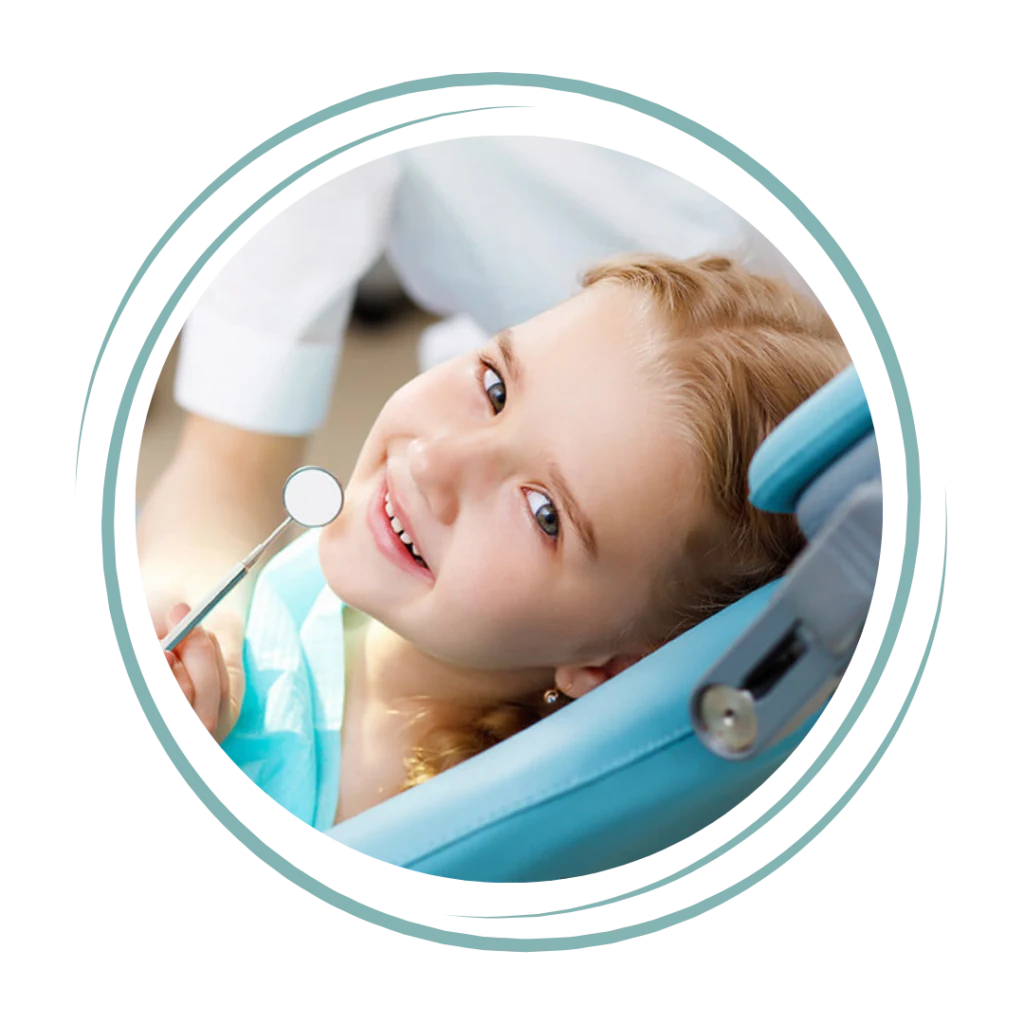
Preventive orthodontics monitors children’s tooth eruption, bite and jaw development to plan intervention at an appropriate time when needed. A first examination does not mean immediate braces or an appliance. Regular monitoring is sufficient for some children, while limited early treatment may be considered for particular developmental problems.
Mixed dentition, when baby and permanent teeth are present together, is important in assessment. However, decisions do not depend on calendar age alone. The problem, dentition stage, growth and the child’s ability to follow treatment instructions are considered together.
At Assoc. Prof. Dr. Halise Aydemir’s clinic in Folkart Towers, Bayraklı, İzmir, the monitoring or treatment goal is explained with the family. The aim is to establish which step is needed for that child and why, rather than applying the same procedure to everyone.
The American Association of Orthodontists recommends a first orthodontic check by around age seven. Eruption and bite problems can be assessed while baby and permanent teeth are present together. This is a screening recommendation, not a rule that every child should start treatment at seven.
There is no need to wait until all the teeth have changed. Concerns such as a sideways jaw shift on closing, a marked bite discrepancy or early loss of a baby tooth can prompt earlier assessment. Reviews and intervention are timed according to findings; there is no universal schedule of “monitoring at eight, an appliance at ten”.
For more detail on preparing for the first visit and developmental stages, see our guide to orthodontic treatment for children.
Early or late loss of baby teeth, a permanent tooth erupting in an unexpected place, marked crowding, a gap when biting or a reversed relationship between upper and lower teeth are relevant findings. Mention a sideways jaw shift on closing, chewing difficulty and changes that concern the family. This is not a list for making a diagnosis at home.
Persistent thumb sucking and the tongue’s relationship with the teeth are assessed alongside the bite. Thumb sucking may contribute to an open bite or forward inclination of upper teeth; appearance alone does not establish a habit’s cause or treatment.
Also report persistent open-mouth posture, mouth breathing or snoring. These concerns should not be treated simply as orthodontic habits; paediatric or ear, nose and throat assessment may be needed. An orthodontic appliance should not be assumed to resolve a breathing problem by itself. See our mouth breathing and jaw development guide for more detail.
Monitoring may be planned when there is no finding requiring active intervention. This means reassessing eruption, space, the bite and growth at planned reviews, rather than ignoring a problem. If treatment is recommended, the purpose of the proposed appliance should be explained.
See jaw treatments for information on expansion and jaw-relationship options. The method depends on examination and the child’s needs.
Planning considers the relationship between baby and permanent teeth, eruption paths, available space, jaw width, the bite and gum health together. Facial and jaw development, habits, the child’s concerns and the family’s observations also contribute.
Examination and photographs can provide records; necessary radiographs and digital measurements are selected according to clinical need. Every child does not need the same investigations, and a photograph alone is not an adequate basis for treatment decisions. Previous dental treatment and existing records can also be shared.
The family is then told why monitoring or active treatment is recommended, its goal, alternatives and daily responsibilities. If a removable appliance is advised, learn its use and cleaning together. Reporting difficulties with wear or appliance problems helps the clinic reassess the plan.
Early assessment and necessary intervention can help manage particular problems, but cannot guarantee that braces, aligners, extractions or jaw surgery will never be needed. Growth, eruption of permanent teeth and the nature of the original problem affect later planning. Comprehensive orthodontic treatment may still be needed after an early stage.
Discuss the intended goal rather than relying on absolute statements such as “surgery is inevitable unless we start now” or “this appliance prevents every problem”. The British Orthodontic Society statement on treatment claims also urges caution about promises that apply to everyone.
Follow-up reviews eruption, jaw relationships and changes in habits. Where needed, options such as a clear retainer or fixed retaining wire and reviews are planned for tooth positions achieved through active treatment. These are not automatically prescribed for every child. Neglecting recommended retention can allow relapse and bite changes; monitoring should also continue while growth is ongoing.
Questions such as “What is the current problem?”, “Why intervene now rather than monitor?”, “What is this stage intended to achieve, and for how long?”, “Could further treatment be needed later?” and “What are our wear and review responsibilities?” help you understand the decision. Share anything that may not fit your child’s daily routine.
For an assessment with Assoc. Prof. Dr. Halise Aydemir at Folkart Towers, Bayraklı, İzmir, explore appointment and contact options. Monitoring or active treatment is selected according to your child’s examination findings.
Understand growth-related approaches in children, dental compensation and surgical options in adults, and how examination…
Read the articleWhen is orthodontic treatment required in children? Learn about dentition periods, monitoring, early intervention, devices and…
Read the articleLearn what matters when assessing thumb sucking, when to seek dental advice, and how to support a child without blame or pressure.
Read the articleView Assoc. Prof. Dr. Halise Aydemir’s current appointment calendar and choose a suitable day and time.
Prefer to call? +90 530 155 09 52
The calendar is provided in Turkish by DoktorTakvimi. Your booking is completed through DoktorTakvimi. Open the calendar in a separate page
We welcome you to Block A of Folkart Towers for an orthodontic assessment and individual treatment planning.
Adalet Mah. Manas Bulvarı No:47/B, Office 2704