Who Is Orthognathic Surgery Considered For?
Learn how dental and skeletal discrepancies differ, what non-surgical and surgical options can achieve, and why suitability…
Read the articleOrthodontic preparation and follow-up for jaw surgery in İzmir, including Class III discrepancies, double jaw surgery and facial asymmetry.
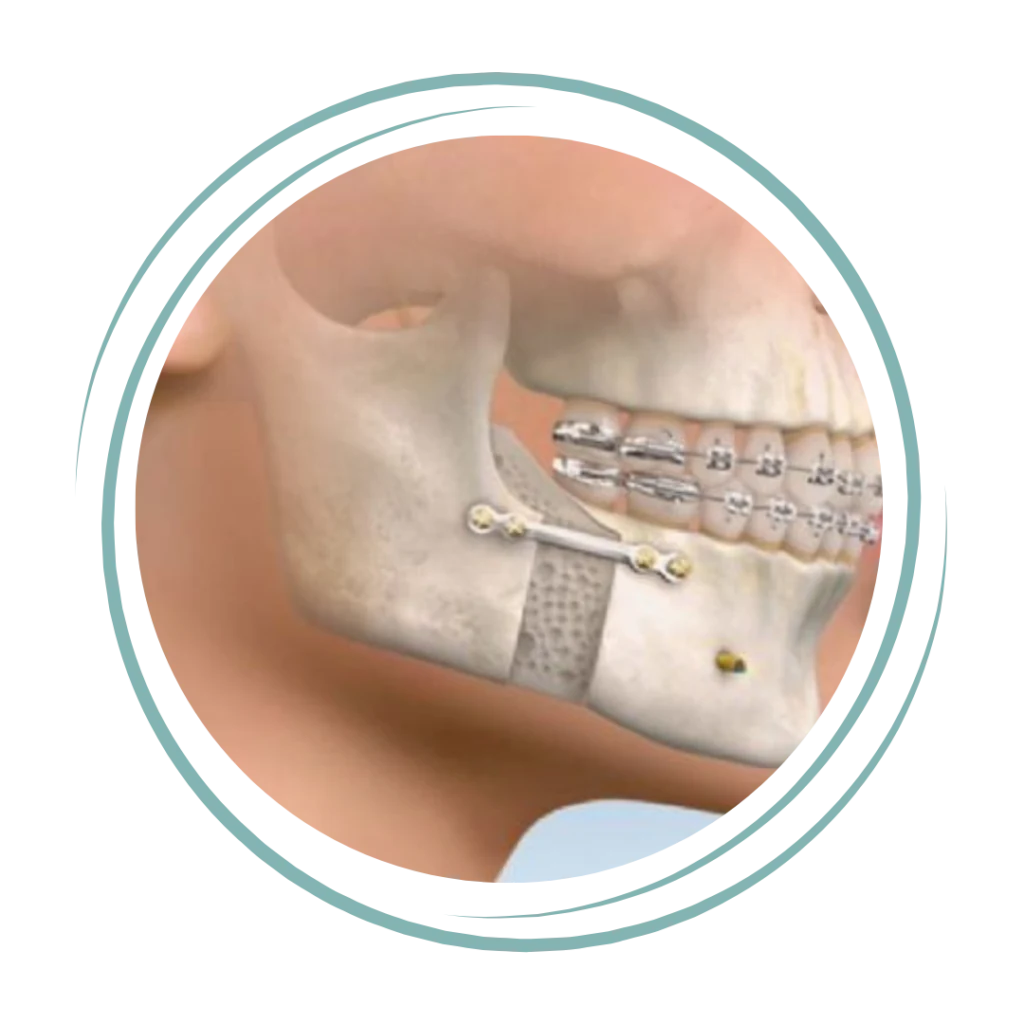
Orthognathic treatment combines surgical repositioning of the jaws with orthodontics for marked skeletal discrepancies. Orthodontics addresses the teeth, while surgery addresses jawbone position. Not every bite problem or facial asymmetry needs an operation.
Assessment considers upper and lower jaw relationships, the bite, chewing, facial profile and personal expectations, rather than straight-looking teeth alone. Mention concerns about speech, lip closure, jaw joints or breathing; surgery should not be assumed to resolve all of them.
At her clinic in Folkart Towers, Bayraklı, İzmir, Assoc. Prof. Dr. Halise Aydemir plans orthodontic preparation and follow-up with the surgical team. The relevant surgical team separately assesses the operation’s scope and decisions about surgery.
No. A bite label such as Class III or an asymmetric appearance is not enough to decide on surgery. Assessment establishes whether the problem arises from tooth positions, a difference between the jawbones, or both, and its extent. A prominent or retrusive lower jaw, retrusive upper jaw, open bite and marked asymmetries may warrant this assessment.
In selected mild cases, orthodontic camouflage can adjust dental relationships. Camouflage does not have the same objective as surgically repositioning the jawbones. With a marked skeletal difference, moving teeth alone may have limitations; the benefits, risks and alternatives to surgery are discussed together.
Single or double jaw surgery is not selected from appearance alone either. Joint analysis determines which jaw should move, in what direction, and the intended bite and facial balance. See Class I, II and III malocclusions for the basic distinctions and who may be suitable for orthognathic surgery for assessment factors.
Preparation does more than put teeth in a straight row: it aims to let them meet appropriately when the jaws reach their planned new positions. Teeth may have tilted to partly compensate for the existing jaw discrepancy; correcting these inclinations can be part of surgical planning.
The bite or jaw discrepancy may therefore look temporarily more pronounced during preparation. The British Orthodontic Society patient leaflet explains this possibility. Discuss at reviews whether changes relate to the intended preparation; an interim appearance should not be judged as the final result without understanding the goal.
Photographs, models or digital impressions, cephalometric analysis and necessary imaging are considered together. Three-dimensional records are selected individually. A simulation helps explain intended movements but does not guarantee an identical appearance or recovery. The orthodontic system, sequence of preparation and readiness for surgery depend on the shared plan.
The orthodontist manages dental preparation, bite adjustments and retention reviews; the surgical team assesses the operation’s scope, surgical suitability and recovery instructions. Goals and timing are agreed together. Straight-looking teeth alone do not establish readiness for surgery.
The order and scope of stages may vary individually. Find out how the teams communicate and whom to contact if a problem occurs. See the orthognathic treatment process guide for more detail.
Pain, swelling and changes in sensation can occur during recovery. Numbness around the lips or jaw does not resolve on the same schedule for everyone; the possibility of permanent sensory change should also be discussed. The University Hospitals Plymouth patient information explains this uncertainty. Discuss your own risks with your surgeon according to the procedure and individual assessment.
Before deciding, understand possible complications of general anaesthesia and the planned operation, expected benefits and alternatives. This general information does not replace an individual risk discussion. The surgical team should explain what belongs to expected recovery and when and how to seek help.
Instructions about eating, oral hygiene, activity and returning to work or school vary. Follow your written plan rather than changing medicines or postoperative elastics yourself. Discuss support at home and transport needs with the team in advance.
Total treatment is more than the operation or hospital stay. Orthodontic preparation, surgical timing, recovery and final bite adjustments are considered together. Initial jaw and tooth relationships, required movements and progress affect duration; another patient’s schedule is not your completion date.
Although surgery changes jaw positions, dental details within the new relationship may still need attention. Orthodontic reviews therefore continue. The bite, jaw movements and gum health are monitored; any elastics or auxiliary components are used only as demonstrated.
After active treatment, options such as a clear retainer or fixed retaining wire may be planned to maintain tooth positions. Neglecting recommended retention can allow relapse and bite changes. Retention does not replace surgical recovery reviews; the appointments and responsibilities for both need to be clear.
You can ask: “Which goal is surgery recommended for?”, “What are the limits of camouflage in my case?”, “Why is single or double jaw surgery proposed?”, “What changes should I expect during preparation?” and “Which team supports recovery and long-term follow-up?” Also discuss expected facial changes, personal risks and the demands of the whole treatment.
For an orthodontic preparation assessment with Assoc. Prof. Dr. Halise Aydemir in Bayraklı, İzmir, contact the clinic. Surgical suitability and the individual plan are determined by considering orthodontic and surgical assessments together.
Learn how dental and skeletal discrepancies differ, what non-surgical and surgical options can achieve, and why suitability…
Read the articleHow does the orthognathic surgery process proceed? Learn about orthodontic preparation, team duties, surgery risks, recovery and…
Read the articleUnderstand dental, functional and skeletal causes, childhood treatment, adult camouflage and when surgical assessment is considered.
Read the articleView Assoc. Prof. Dr. Halise Aydemir’s current appointment calendar and choose a suitable day and time.
Prefer to call? +90 530 155 09 52
The calendar is provided in Turkish by DoktorTakvimi. Your booking is completed through DoktorTakvimi. Open the calendar in a separate page
We welcome you to Block A of Folkart Towers for an orthodontic assessment and individual treatment planning.
Adalet Mah. Manas Bulvarı No:47/B, Office 2704