My Teeth Have Shifted Again After Braces: What Should I Do?
Learn how renewed crowding or spacing after braces is assessed, when a new retainer may help, and how limited or comprehensive…
Read the articleCeramic and sapphire brackets combine fixed orthodontic control with a discreet appearance. Explore suitability, care and retention in İzmir.
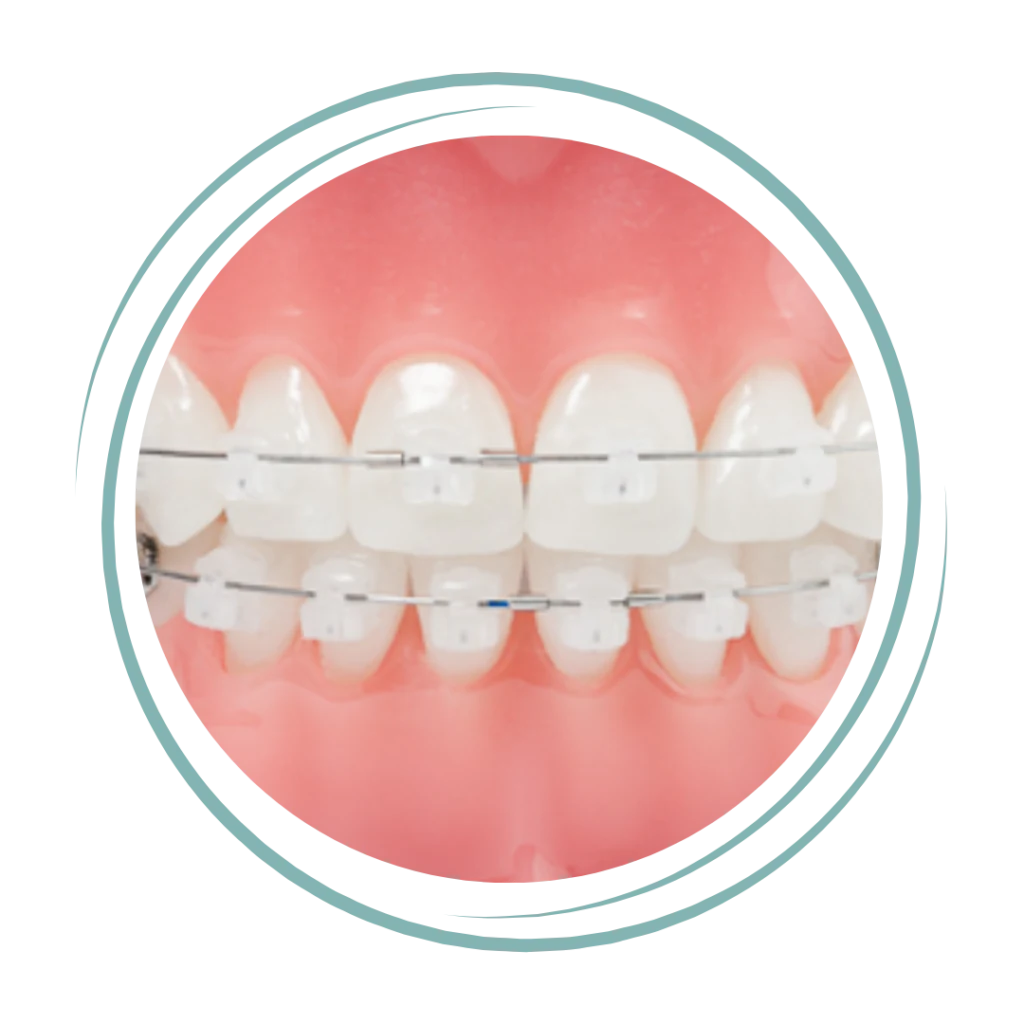
Aesthetic bracket treatment uses tooth-coloured or translucent brackets bonded to the front tooth surfaces together with wires. Here, “clear braces” means aesthetic options such as ceramic or sapphire brackets, rather than removable aligners. The wire itself may be metal; the whole system is not invisible.
It may be considered by people seeking a less noticeable appearance. Being fixed removes the responsibility of taking aligners out and replacing them, but does not remove the need for cleaning, dietary care, prescribed elastics or review appointments.
At her clinic in Folkart Towers, Bayraklı, İzmir, Assoc. Prof. Dr. Halise Aydemir assesses aesthetic brackets alongside tooth colour, the bite, required movements and oral health. The aim includes an appropriate bite and follow-up plan, as well as appearance during treatment.
Ceramic brackets can offer a tooth-coloured appearance, while options described as sapphire may be more translucent. Appearance depends on more than the material: tooth colour, the wire, connecting components and lighting also affect visibility. Rather than choosing on a claim of being “most invisible”, assess sample components alongside your own plan.
Aesthetic brackets remain fixed to the teeth during treatment and are not removed for meals or cleaning. Clear aligners are removable and require adherence to daily wear instructions. Individual suitability and reviews matter for both. Metal brackets are another fixed option to compare.
Choosing an aesthetic bracket does not mean choosing faster treatment or the same outcome for everyone. See clear aligner treatment for the removable option and braces or clear aligners? for daily-use differences.
Aesthetic brackets may be assessed for crowding, gaps, deep bite, open bite or crossbite. The name of the problem alone does not establish suitability; required movements, tooth contacts, gum health and bone support are considered together. Adults can also discuss fixed orthodontic options when supporting tissues and care conditions are suitable.
In a deep bite, contact between opposing teeth and ceramic brackets is particularly important. Because the hard material may affect a contacting tooth, another option may be recommended for some lower-tooth applications. The British Orthodontic Society explanation of fixed treatment describes this limitation. It does not mean that ceramic brackets are excluded in every deep bite.
Mention clenching, biting hard objects, dietary habits and cleaning routines. Material selection considers treatment needs and daily responsibilities, as well as tooth colour. An aesthetic bracket does not reduce the importance of existing decay or gum problems.
Planning starts with examination, bite assessment, photographs, impressions and necessary radiographs. Tooth colour, the area for bracket placement, oral hygiene and expectations are recorded. Every patient does not need identical investigations or material choices.
Suitable brackets are placed on the teeth and connected with an archwire. Reviews assess movement, the bite, bracket condition and cleaning; wires or auxiliary parts are adjusted according to need. If elastics are prescribed, use them only as demonstrated.
Review frequency and estimated duration are explained for your individual plan. A fixed system remains in the mouth but does not replace appointments. Movement and care need monitoring together from initial placement to completion of active treatment.
Clean around brackets, the gumline and between teeth regularly. Alongside brushing with fluoride toothpaste, ask your clinician to demonstrate suitable interdental cleaning. Reaching around a fixed system may need extra care; cleaning only the outer bracket surface is insufficient. Continue general dental check-ups too.
A visible colour change does not always mean the bracket material has stained. Elastic ligatures, where used, can discolour; deposits or changes on the tooth surface can also affect appearance. “Ceramic never stains, so care does not matter” is therefore not a sound assumption. The source of discolouration should be assessed at review.
Hard or sticky foods and biting directly into hard items can strain the system. Follow your instructions about food preparation and habits to avoid. Use care products according to individual advice; do not scrape brackets or change components to remove marks.
Tell the clinic if a bracket comes loose or breaks, or a wire causes discomfort; ask whether you should be seen before your routine review. A broken appliance can affect progress. The BOS fixed-appliance leaflet also recommends contacting the treating team after breakage.
Do not glue or remove the bracket yourself, or decide to cut the wire. Explain which part is causing the problem and get individual advice. Also report repeated breakages, clenching or difficulties with particular foods.
Pressure and tenderness may follow initial placement or adjustment; contact with the lips or cheeks can cause discomfort. Consult your clinician if symptoms affect wear or eating. Choosing aesthetic brackets does not guarantee painless treatment or freedom from irritation.
Duration depends on required movements, bite goals, regular reviews and protecting the appliance. A ceramic or sapphire label cannot establish a completion date. Removing brackets depends on assessment of treatment goals, rather than straight-looking teeth alone.
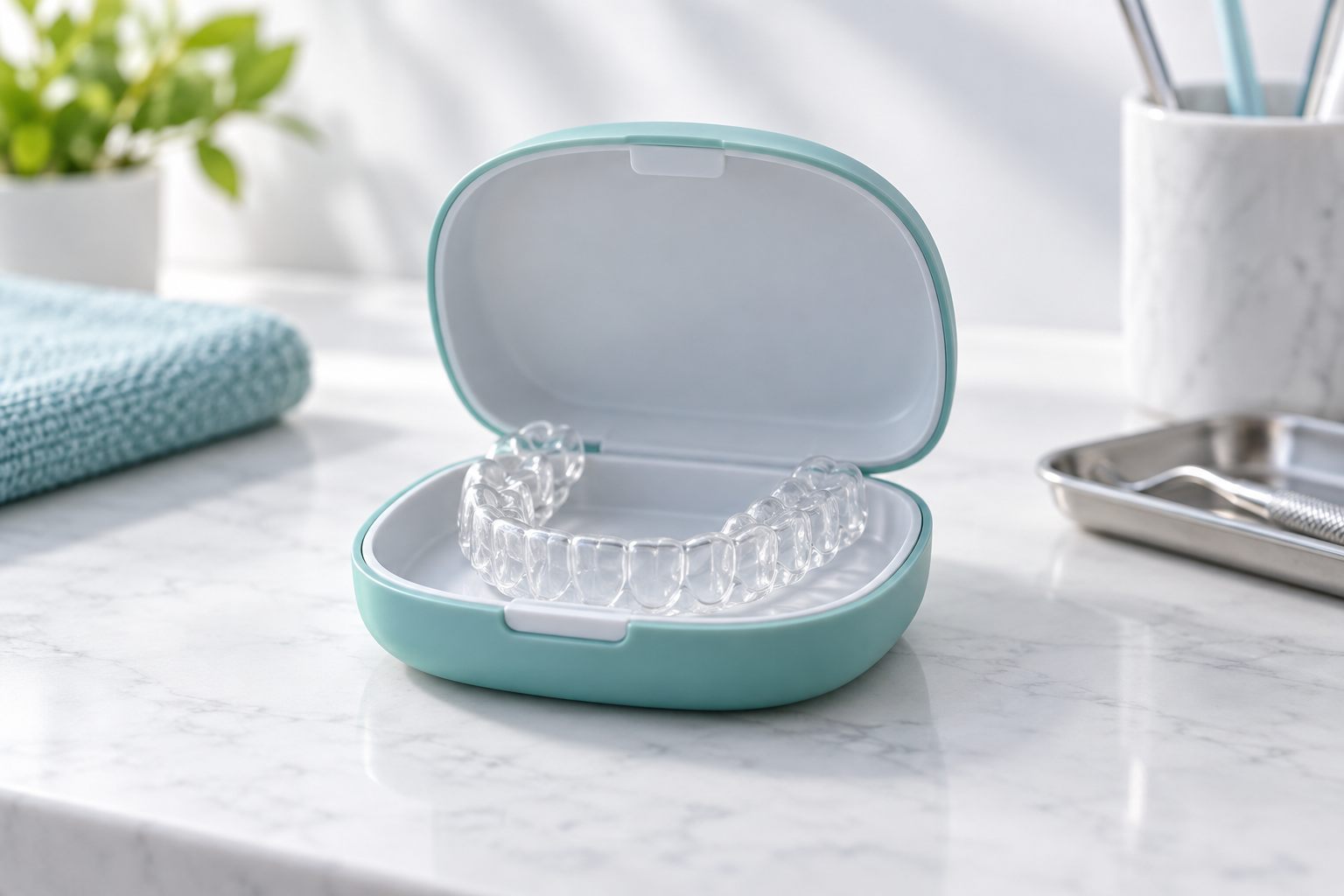
Retention is needed after active treatment to help maintain tooth positions. A clear retainer or fixed retaining wire and review schedule are selected individually. Neglecting this stage can allow relapse and bite changes.
You can ask: “Are these brackets suitable for my bite?”, “How visible will the wire and elastics be?”, “What should I do about care or breakage?” and “What is my retention plan?” To discuss options with Assoc. Prof. Dr. Halise Aydemir in Bayraklı, İzmir, contact the clinic.
Learn how renewed crowding or spacing after braces is assessed, when a new retainer may help, and how limited or comprehensive…
Read the articleLearn how adult orthodontic suitability is assessed, including gum health, braces and aligners, missing teeth, preparation and…
Read the articleUnderstand bonded, clear and Hawley retainers, individual wear plans, daily care and why retention reviews remain important after…
Read the articleView Assoc. Prof. Dr. Halise Aydemir’s current appointment calendar and choose a suitable day and time.
Prefer to call? +90 530 155 09 52
The calendar is provided in Turkish by DoktorTakvimi. Your booking is completed through DoktorTakvimi. Open the calendar in a separate page
We welcome you to Block A of Folkart Towers for an orthodontic assessment and individual treatment planning.
Adalet Mah. Manas Bulvarı No:47/B, Office 2704