Mouth Breathing and Jaw Development
How are mouth breathing and jaw development related? Learn the signs, the roles of ENT and orthodontic assessment, and how…
Read the articleInformation about jaw relationship problems, a narrow upper jaw and orthodontic jaw treatments in İzmir.
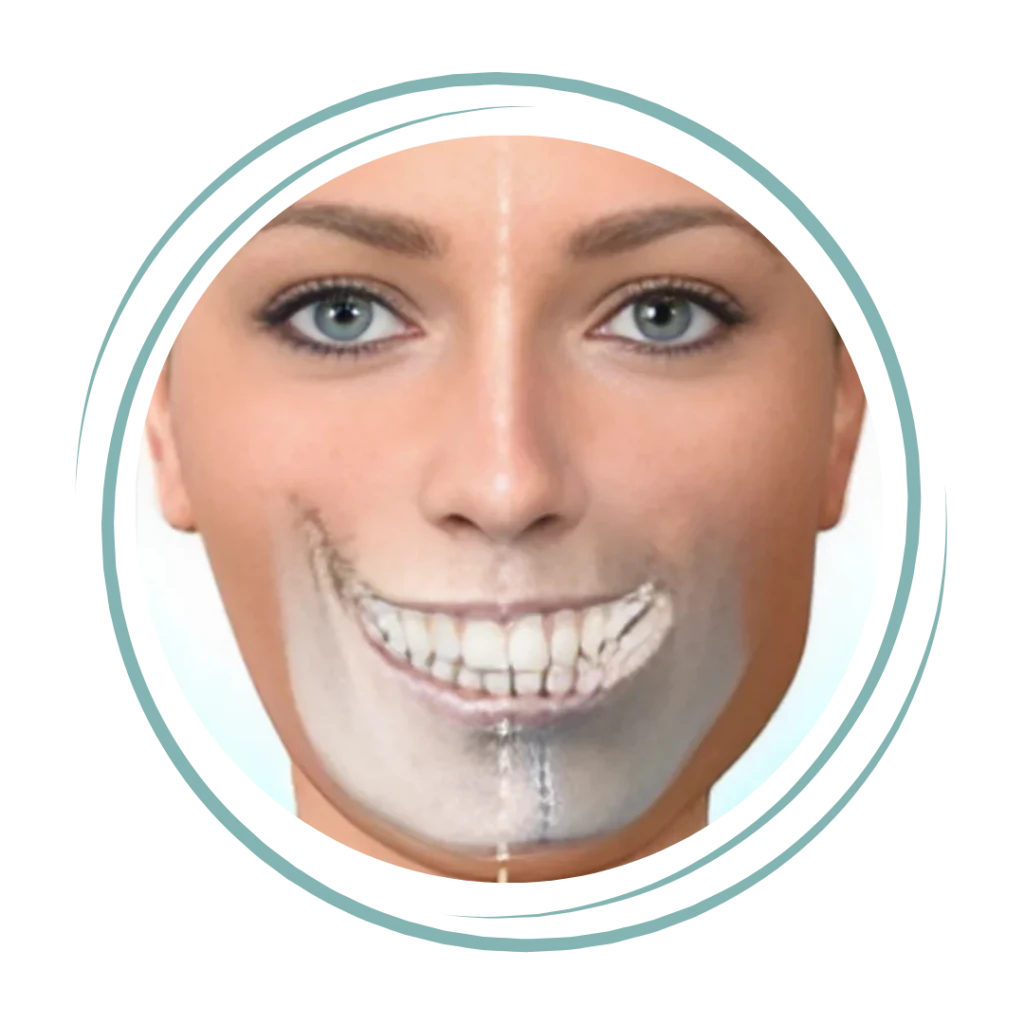
Orthodontic jaw treatment considers upper-lower jaw relationships alongside the bite, growth and facial appearance. Retrusion, prominence, narrowing and asymmetry do not all need the same approach. Assessment first distinguishes tooth positions, jawbones and shifts during closure.
At Assoc. Prof. Dr. Halise Aydemir’s clinic in Folkart Towers, Bayraklı, İzmir, these findings are considered with age, oral health, daily function and expectations. Not every jaw problem requires surgery; equally, a nonsurgical option cannot be assumed to achieve every facial or skeletal change.
A retruded or prominent lower jaw, upper narrowing, reverse or open bite, sideways closure and facial asymmetry can prompt assessment. One photograph cannot explain their source. Describe bite sensations and everyday difficulties too.
| What you notice | What assessment distinguishes | Related guide |
|---|---|---|
| Lower jaw looks retruded or upper teeth prominent | Contributions from tooth inclination and jaw relationships | Lower jaw retrusion |
| Lower teeth bite ahead of upper teeth | Dental, skeletal and functional components | Options for a prominent lower jaw |
| Upper jaw looks narrow or back teeth crossbite | Inclination, relative jaw widths and supporting tissues | Upper jaw narrowing assessment |
| Chin looks uneven or moves sideways on closure | Fixed asymmetry versus a movement-related shift | Jaw asymmetry assessment |
The table directs questions rather than diagnosing. See the bite classification page for Class I, II and III. A class name alone does not determine a method or surgical need.
Assessment need not wait for all permanent teeth when a concern is noticed. The American Association of Orthodontists recommends a first check when a problem is recognised and no later than age seven. This is an assessment recommendation, not a requirement for every child to begin active treatment then.
Suitable growing patients may be considered for functional or expansion appliances; sometimes monitoring alone is advised. Decisions depend on the relationship to change and development. Families should understand what is being addressed now and what remains under review.
Early intervention does not guarantee control of all growth or avoidance of later surgery. Share observations about thumb sucking, dummy use, swallowing and breathing without treating them alone as a diagnosis. See the child orthodontics guide for detail.
Some adults may have nonsurgical options, but their goals need explanation. Improving the bite by moving teeth differs from repositioning jawbones. Childhood growth guidance cannot simply be transferred to a fully grown patient.
Orthodontic camouflage changes tooth positions to compensate for existing relationships in selected cases. Inclination, space, bone and gum support limit movement. Expected profile changes may differ from surgical goals.
Upper jaw expansion is a separate assessment. A narrow dental arch and skeletal narrowing differ; adults cannot all expect the same appliance or result. See adult expansion options.
Orthognathic surgery may enter joint assessment when tooth movement alone cannot meet skeletal goals. AAO surgical orthodontic information explains orthodontist-surgeon planning. A referral does not require an operation decision that day.
Planning begins with concerns and previous treatment. Alignment, contacts, jaw movement, profile, growth and oral health are examined. Describe biting, chewing, cleaning or lip-closure difficulties alongside appearance.
Not everyone needs identical imaging. Ask which question a record answers; see the first appointment guide. If surgery is considered, orthodontic preparation and later stages may also form part of the orthognathic plan.
Appearance changes depend on the structure and direction involved. Alignment, inclination changes and jawbone repositioning have different goals. Describe the particular profile or asymmetry concern and ask how far the plan may address it. Complete facial symmetry should not be promised.
Joint pain, locking or opening difficulty need separate assessment. NIDCR joint information explains that muscle and joint disorders can have different causes. Bite changes do not guarantee symptom relief; other specialist assessment may be appropriate.
Also report mouth breathing, snoring or other breathing symptoms. These alone do not diagnose a narrow jaw, and expansion cannot be promised to resolve every breathing problem. Discuss orthodontic goals and respiratory assessment needs separately.
Follow-up assesses original contact and bite goals and any continuing growth. Straight teeth alone do not establish completion of all goals. Explain which findings and records will be compared according to age and treatment.
Fixed or removable retainers may help maintain positions after active care. Instructions and reviews are personal; a retainer does not stop all future jaw growth. The retention guide distinguishes maintenance from active treatment. Report new fit or bite changes to the clinic.
Share previous records, appliance or retainer details and your main expectations. Describing the appearance or daily function that bothers you is more useful than asking only for a treatment name.
For assessment at Assoc. Prof. Dr. Halise Aydemir’s clinic in Folkart Towers, Bayraklı, see appointment and directions information or call +90 530 155 09 52. A clear plan explains reasons and limits alongside procedures.
How are mouth breathing and jaw development related? Learn the signs, the roles of ENT and orthodontic assessment, and how…
Read the articleUnderstand dental, functional and skeletal causes, childhood treatment, adult camouflage and when surgical assessment is considered.
Read the articleLearn how facial appearance, bite, jaw movement, growth and imaging inform an individual assessment of jaw asymmetry.
Read the articleView Assoc. Prof. Dr. Halise Aydemir’s current appointment calendar and choose a suitable day and time.
Prefer to call? +90 530 155 09 52
The calendar is provided in Turkish by DoktorTakvimi. Your booking is completed through DoktorTakvimi. Open the calendar in a separate page
We welcome you to Block A of Folkart Towers for an orthodontic assessment and individual treatment planning.
Adalet Mah. Manas Bulvarı No:47/B, Office 2704