
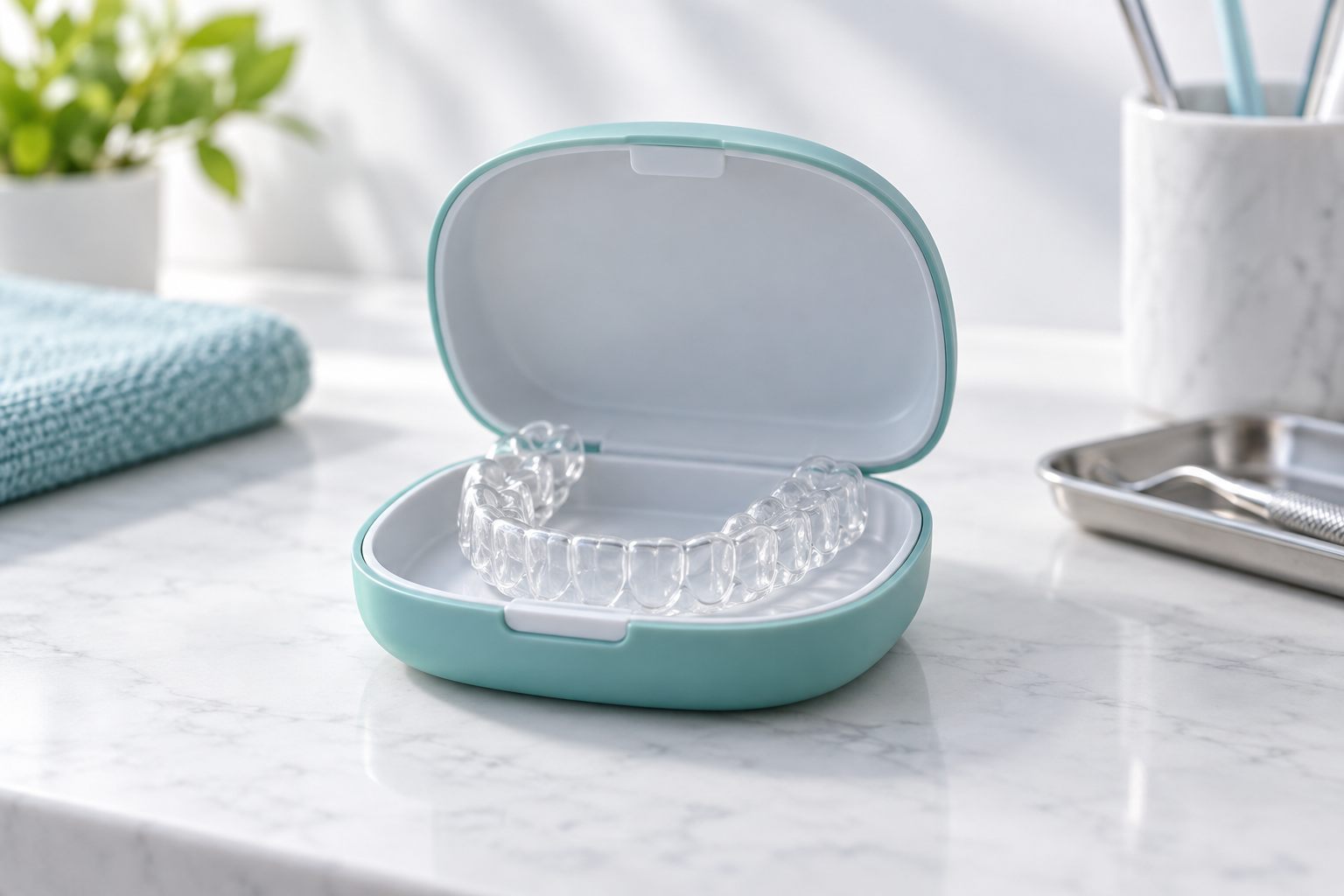
What Is a Retainer and Why Is It Needed After Braces?
Understand bonded, clear and Hawley retainers, individual wear plans, daily care and why retention reviews remain important after…
Read the articleLearn how renewed crowding or spacing after braces is assessed, when a new retainer may help, and how limited or comprehensive retreatment is considered.
Author: Assoc. Prof. Dr. Halise Aydemir, Orthodontic Specialist.
Teeth rotating, overlapping or developing gaps again after braces is a change that needs reassessment. It does not automatically mean restarting the entire treatment. First establish which teeth moved, whether the bite is affected, the condition of the gums and the state of the current retention appliance.
If your old retainer no longer fits, do not force it to move teeth back. Report new movement even if a bonded wire appears in place. Some people may need an adjusted retention plan, while others may discuss active correction. The appropriate route depends on previous records considered alongside today's examination. The aim is not simply to reproduce an old photograph, but to establish a sustainable plan compatible with oral health.
Describe the change clearly: is one tooth rotating, are lower front teeth crowded, has a gap appeared or do contacts feel different on closing? These are different concerns. Identifying the area and change gives your orthodontist more useful information than simply saying your teeth have become crooked again.
Also explain when treatment ended and how you have recently used your retainer. You need not hide interrupted wear. The purpose is to understand the situation, not assign blame. Change can also be noticed despite regular wear; appliance fit and integrity then need separate consideration.
| Observation | Conclusion not to draw immediately | Information to report |
|---|---|---|
| An old retainer does not seat fully | Pressing harder will fix it. | Where a gap remains and when it last fitted comfortably |
| A wire remains, but one tooth looks rotated | Teeth cannot move with a wire present. | The new appearance and any loosening or irritation |
| A new gap accompanies bleeding | This is only the old orthodontic problem returning. | Duration of bleeding, swelling and perceived mobility |
| Lower front teeth differ from an old photograph | The entire treatment definitely needs repeating. | How long the difference has been noticed and any bite concern |
Heating or cutting plastic, bending wire with pliers or trying to bring teeth together with elastics cannot replace assessment. Clarify continued use of an ill-fitting appliance with your clinician. The AAO retainer information emphasises orthodontic advice for changed fit or damage. The poorly fitting retainer guide explains possible distinctions separately.
Arrange a dental assessment for bleeding or swollen gums. If teeth become newly loose or the gums are very sore and swollen, request an urgent dental appointment rather than wait for routine orthodontic follow-up. The NHS gum disease information also advises urgent dental assessment for these signs. Seek healthcare for rapidly increasing swelling, severe pain or symptoms affecting your general condition. Describe the symptoms clearly when seeking care; do not treat them as cosmetic movement alone.
Alignment achieved through treatment is not something that remains unchanged under every condition throughout life. Orthodontic relapse describes corrected teeth moving towards former positions. However, not every later change exactly recreates the original problem. The British Orthodontic Society explains both relapse tendencies and other age-related positional changes as reasons for long-term retention.
This distinction matters: previous upper spacing does not explain every episode of lower crowding years later as the same event. Comparing current findings with old records gives the change context. Having had treatment years ago alone does not establish why teeth moved or which treatment is now needed.
Assessment asks whether retention stopped, fit changed or a bonded attachment failed. However, assuming nothing else needs checking because you stopped wear is incomplete too. Gum health and bite are part of today's plan. Particularly with new spacing, mobility or oral health symptoms, assessment should not be limited to replacing an appliance.
How obvious movement looks in one photograph cannot explain the entire situation. Lighting, angle and lip position affect comparisons. Old images should therefore support the history rather than act alone as measurements or diagnosis. Examination records allow more meaningful comparison.
Retention aims to reduce change rather than guarantee results. The retainer guide explains appliance designs and care responsibilities.
Two questions are considered: what changed since the previous treatment ended, and which goals can safely be achieved now? Old photographs or models may help with the first; the second requires current examination. If records are elsewhere, request information you can access. Not having every old document does not prevent attending.
Assessment goes beyond the front-tooth order in photographs. Opposing contacts, posterior relationships and any chewing-related concern are discussed. An aesthetic change in one tooth and an altered bite may create different goals. If you want only one tooth corrected, ask how it relates to the others and what limits apply.
Report extractions during previous treatment and any subsequent implants, crowns or fillings. They do not automatically prevent retreatment, but help explain the current situation. Rather than assume the old plan will be repeated, ask why the new plan may differ.
Oral health should be assessed before deciding which appliance will straighten teeth. Bleeding, recession, suspected decay or mobility may need separate attention. Leaving gums until after alignment could postpone necessary preparation. The pre-orthodontic gum assessment article explains further.
The NHS braces information describes photographs, scans or X-rays as possible parts of a child’s assessment. This does not establish a standard imaging package for adult retreatment. Your clinician determines which record will answer a particular clinical question in your case.
| Record or information | Contribution to the consultation |
|---|---|
| Photographs and models from the end of previous treatment | Help compare change with the earlier result. |
| Current oral examination and bite assessment | Clarify contacts as well as appearance. |
| The retainer and wear history | Allow fit and actual use to be considered together. |
| Indicated imaging | Investigates root or bone questions arising at examination. |
Begin by distinguishing maintaining today's positions from moving teeth again. Making a new retainer is different from active correction. Its main role is helping preserve an agreed position. Discuss explicitly any expectation that replacing a poorly fitting old retainer will recreate the alignment in an old photograph.
Movement size alone cannot decide. Direction, roots and support, upper/lower relationships and expectations matter together. A small-looking difference may not be simple to correct. Conversely, an appearance that worries you does not automatically require comprehensive retreatment.
| Approach for discussion | Main purpose | Question before deciding |
|---|---|---|
| Retention appropriate to current positions | Preserve the accepted current arrangement | Are those positions acceptable for health and goals? |
| Limited orthodontic correction | Target particular tooth movements | Is that limited scope appropriate for the bite and other teeth? |
| More comprehensive braces or aligners | Address alignment and relevant bite goals | Which problems are addressed together and which remain outside scope? |
| Other oral health care first | Provide preparation before orthodontic planning | Which finding must be controlled before reassessment? |
A plan targeting only visible front teeth may be discussed in selected patients. Limited goals do not mean limited examination. The BOS limited-treatment information emphasises considering suitable options and understanding bite effects. Possible adverse effects on another relationship should not be overlooked in pursuit of appearance.
Ask what the plan will and will not change. Correcting one rotation differs from reorganising the whole bite. Understand accepted limitations before choosing a plan because it sounds short or easy. This does not imply comprehensive treatment is always necessary either.
Previous braces do not make the same method compulsory now. Wanting aligners does not establish their suitability for every movement. Discuss methods against movements and personal circumstances. The braces/aligner comparison explains daily differences, but its table cannot select your treatment alone.
Retreatment cannot be assumed shorter than the first course or complete within a fixed number of aligners. If a duration is discussed, ask which goals, records and continuation conditions support it. Explain change needed, treatment scope and the position to retain together.
If correction is chosen, do not leave retention planning until the last day. Discuss from the outset which positions will be maintained, why each appliance is proposed and whom to contact about faults. Explaining previous difficulties may make the new plan more practical.
Repeatedly losing a removable retainer, interrupted night wear, difficulty cleaning a bonded wire and relocating are different problems. Instead of advice merely to be more careful, request a concrete solution and follow-up route. Changing the appliance does not itself remove wear or review responsibilities.
The retention plan should clarify:
This does not provide universal nights of wear, review intervals or appliance lifespan. Your examining clinician provides instructions for your teeth and appliance. Another person's online schedule should not replace yours.
A second correction does not remove the need to plan retention. Learn which wear and review responsibilities continue after appliance removal. Explain beforehand if a plan will be difficult to follow, so previous experience and current needs can be considered together.
A brief note is enough; you need not write an extensive medical file. Distinguish change timing, appliance condition and your main concern, bringing old records if available. Rather than select an X-ray package online or obtain tests merely for preparation, discuss whether existing records are sufficient.
A hypothetical note might say: treatment ended about four years ago; one lower front tooth has looked rotated for two months; removable wear has been irregular and one side no longer seats; the bite also feels different; old completion photographs and the retainer will be brought. This is a communication example. Its durations are neither treatment decisions nor safe waiting periods.
These questions can help compare the plan:
If you receive two plans, compare goals before appliances or prices. One may concern aesthetic alignment alone and the other a broader correction including the bite. Different scopes should not be treated as identical services. Ask why each is recommended and which limits are accepted.
Do not automatically conclude nothing can be done because of age or earlier treatment. The adult orthodontics guide explains assessment of health and goals alongside age. For an İzmir appointment, see the contact page. Personal decisions arise from examination and appropriate records, not the examples here.
Further orthodontic options may be assessed. Previous braces alone prove neither suitability nor unsuitability. Current planning considers oral health, roots and supporting tissues, the bite and intended movements. Appliance and scope follow that assessment.
This may be discussed in some situations, but upper and lower teeth relate to each other. A visible lower-only problem does not guarantee treatment can be limited there. Ask about bite effects and goals excluded by a single-arch plan.
New front crowding alone does not prove wisdom teeth caused it or need extraction. Wisdom-tooth assessment and correction of current crowding are different questions. Do not decide extraction from appearance; raise the question separately at examination. The guide to increasing lower crowding also explains the limits of wisdom-tooth research.
Report new movement or poor fit rather than independently choose a waiting period. A photograph's appearance cannot calculate a safe interval. The clinician informed about symptoms and appliance condition should set review timing. Forcing a painful or unseated retainer does not make waiting safe.

Specialist in Orthodontics · İzmir Folkart Towers
Meet your orthodontist →This article provides general information and does not replace an individual examination. Diagnosis and treatment planning are based on a personal assessment.
Understand bonded, clear and Hawley retainers, individual wear plans, daily care and why retention reviews remain important after…
Read the articleLearn how adult orthodontic suitability is assessed, including gum health, braces and aligners, missing teeth, preparation and…
Read the articleUnderstand why front teeth may separate during palatal expansion, what the gap cannot tell you, and why screw adjustments must…
Read the articleView Assoc. Prof. Dr. Halise Aydemir’s current appointment calendar and choose a suitable day and time.
Prefer to call? +90 530 155 09 52
The calendar is provided in Turkish by DoktorTakvimi. Your booking is completed through DoktorTakvimi. Open the calendar in a separate page
We welcome you to Block A of Folkart Towers for an orthodontic assessment and individual treatment planning.
Adalet Mah. Manas Bulvarı No:47/B, Office 2704